Planning Care After a Work Injury
Work injury evaluations should cover how the injury happened, current symptoms, job demands, prior health history, functional limits, treatment goals, and documentation. Arrowhead Clinic Chiropractor Savannah uses these details to plan appropriate chiropractic care and explain next steps.
Request an Estimate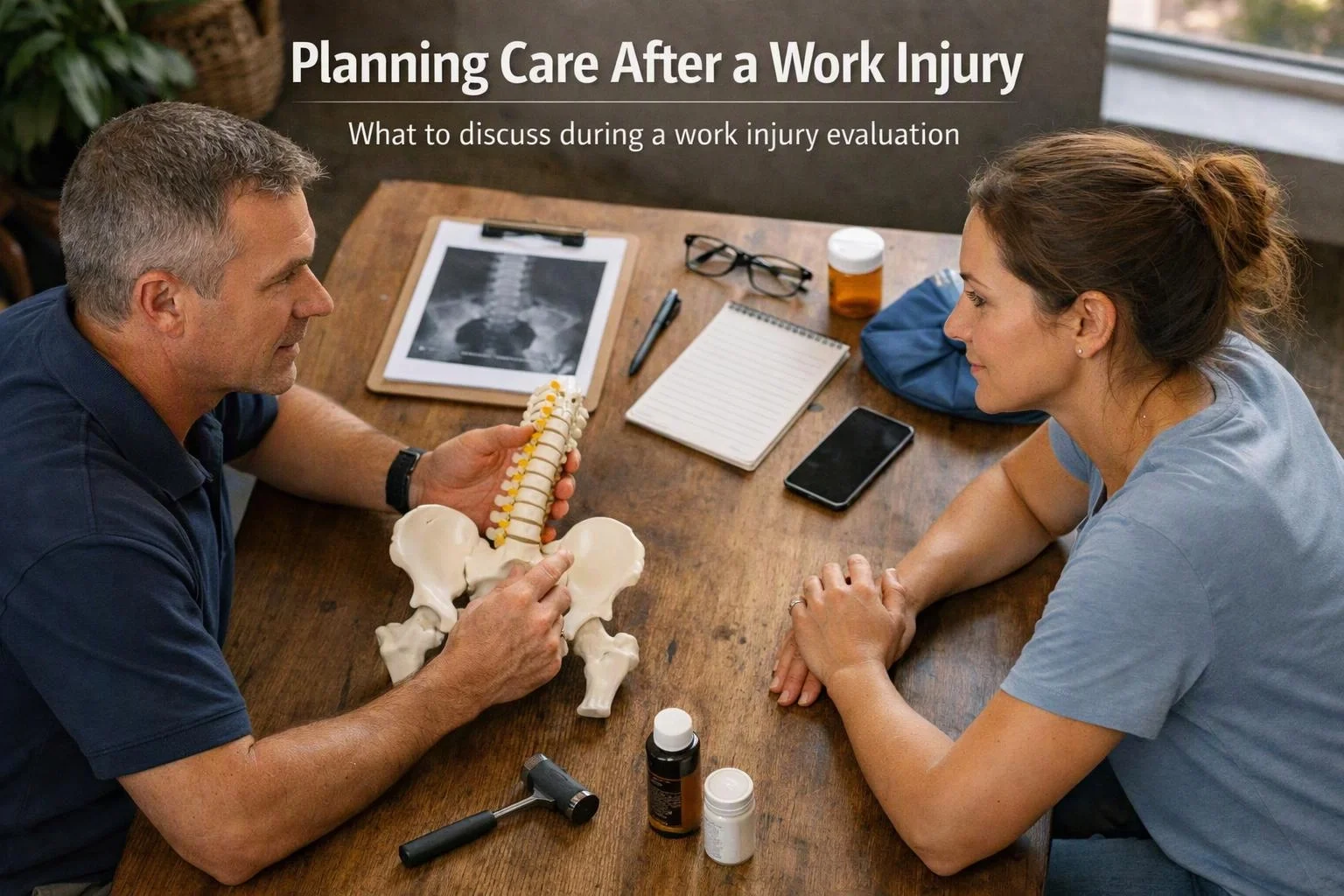
What Should You Discuss During a Work Injury Evaluation?
Work injury evaluations should discuss how the injury occurred, what symptoms you have, how work affects your condition, and what you want treatment to help you do.
We ask about the injury mechanism, including the activity or workplace accident that started your symptoms. We also review your pain location, symptom history, job duties, and treatment goals.
This conversation helps connect a workplace injury with a focused chiropractic evaluation. Our team uses the information to guide work injury treatment and explain suitable next steps.
Which Symptoms Should You Report Clearly?
Clear symptom details help us understand the type and effect of a possible musculoskeletal injury. Tell our team when each symptom began, what makes it worse, and how it affects daily tasks.
We also want to know whether symptoms are constant, changing, or linked to specific work activities. Accurate details make the physical examination more useful.
How Does the Injury Affect Your Work?
Job duties can affect symptoms by placing repeated stress on the injured area or limiting safe movement.
Describe whether lifting, bending, reaching, standing, or sitting increases your symptoms. Explain which tasks you can complete, which tasks are difficult, and which tasks you cannot safely perform.
We use these details to discuss functional limitations, work capacity, and possible work restrictions. Our team can include work activity guidance in the care plan when appropriate.
What Information Helps Us Plan Chiropractic Care?
Medical history, previous injuries, current care, available records, and treatment goals help us connect the workplace injury with an appropriate chiropractic care plan.
Share information about medications, imaging, previous treatment, and any conditions that may affect your symptoms or movement. Available medical records and imaging reports can add useful context.
During the clinical examination, we review movement, strength, tenderness, and other findings related to your concerns. We use the complete injury assessment to shape care around your symptoms and functional needs.
What Commonly Causes Work-Related Musculoskeletal Injuries?
Work-related musculoskeletal injuries commonly develop when force, repetition, or poor positioning places stress on the body.
Our evaluation considers the mechanism of injury and the physical demands around it. That context helps us understand whether symptoms may relate to a sudden event, repeated strain, or both.
What Can Help Prevent Another Work Injury?
Prevention focuses on reducing avoidable strain during routine work activities. These habits support safer movement but should match your current condition and restrictions.
We can discuss how work habits relate to your symptoms during care planning. Our team also considers return-to-work needs when reviewing movement and activity.
How We Turn Evaluation Findings Into a Care Plan
Our chiropractic treatment plan connects your history, examination findings, and work demands with practical care goals.
We adjust the discussion as new information becomes available. The goal is to make the care plan understandable and connected to your treatment goals.
What Does the Initial Consultation Include?
The initial consultation includes a symptom review, injury history, clinical goals, and a discussion of your work-related concerns.
Our team listens to how the injury affects your job duties and daily life before explaining the clinical examination. We offer Free Consultations so you can discuss your concerns and understand the next steps.
What Should You Bring to the Evaluation?
Bring information that helps us verify the injury timeline, understand your work demands, and review care you have already received.
Documentation can help our team compare your history with examination findings. Contact us if you are unsure which records are relevant to your evaluation.
When Should You Seek Further Medical Assessment?
Urgent medical assessment is appropriate for severe pain, progressive weakness, loss of sensation, loss of coordination, or concerning head injury symptoms.
Seek prompt medical attention when symptoms are sudden, worsening, or linked with a serious workplace event. Our team can review chiropractic concerns, but urgent symptoms may require assessment beyond routine chiropractic care.
Tell us about any change in symptoms during your evaluation. We use that information to help guide the safest next step.
Questions About Work Injury Care Planning
What should I tell the chiropractor about my work injury?
Arrowhead Clinic Chiropractor Savannah needs the injury mechanism, symptom timeline, pain location, job duties, functional limitations, previous treatment, and treatment goals.
Should I bring medical records to a work injury evaluation?
Yes, bring relevant medical records, imaging reports, medication details, and written work restrictions when they are available. These documents help us understand previous care and connect it with the current examination.
Can a work injury evaluation address job-related movement restrictions?
Yes, a work injury evaluation can review how lifting, bending, reaching, standing, and sitting affect your symptoms. We use examination findings and reported limitations to discuss appropriate work activity guidance.
What happens after a chiropractic evaluation for a work injury?
After a chiropractic evaluation, we review the findings with you and explain a care plan connected to your symptoms, clinical goals, and work activity needs. We also discuss documentation and next steps that fit the evaluation.
Arrowhead Clinic Chiropractor Savannah is ready to discuss your work injury evaluation, symptoms, job demands, and treatment goals. Contact our team to arrange the next step.