
What Is Proprioception?
Proprioception is the body’s ability to sense the position and movement of its joints and limbs without relying on vision. Receptors in muscles, tendons, joints, and skin send information to the nervous system. This internal feedback helps you coordinate movement, control force, maintain posture, and adjust your body during activity.
Quick Facts About Proprioception
Category
Sensory and movement control
Used for
Posture, coordination, and body awareness
Common confusion
Balance
Also called
Body awareness, Kinesthesia
Often discussed with
Therapeutic Exercise
Key Takeaways About Proprioception
- A sensory process, not a muscle or joint.
- Exercise can challenge it through controlled changes in support.
- It is not the same as balance.
How Proprioception Works
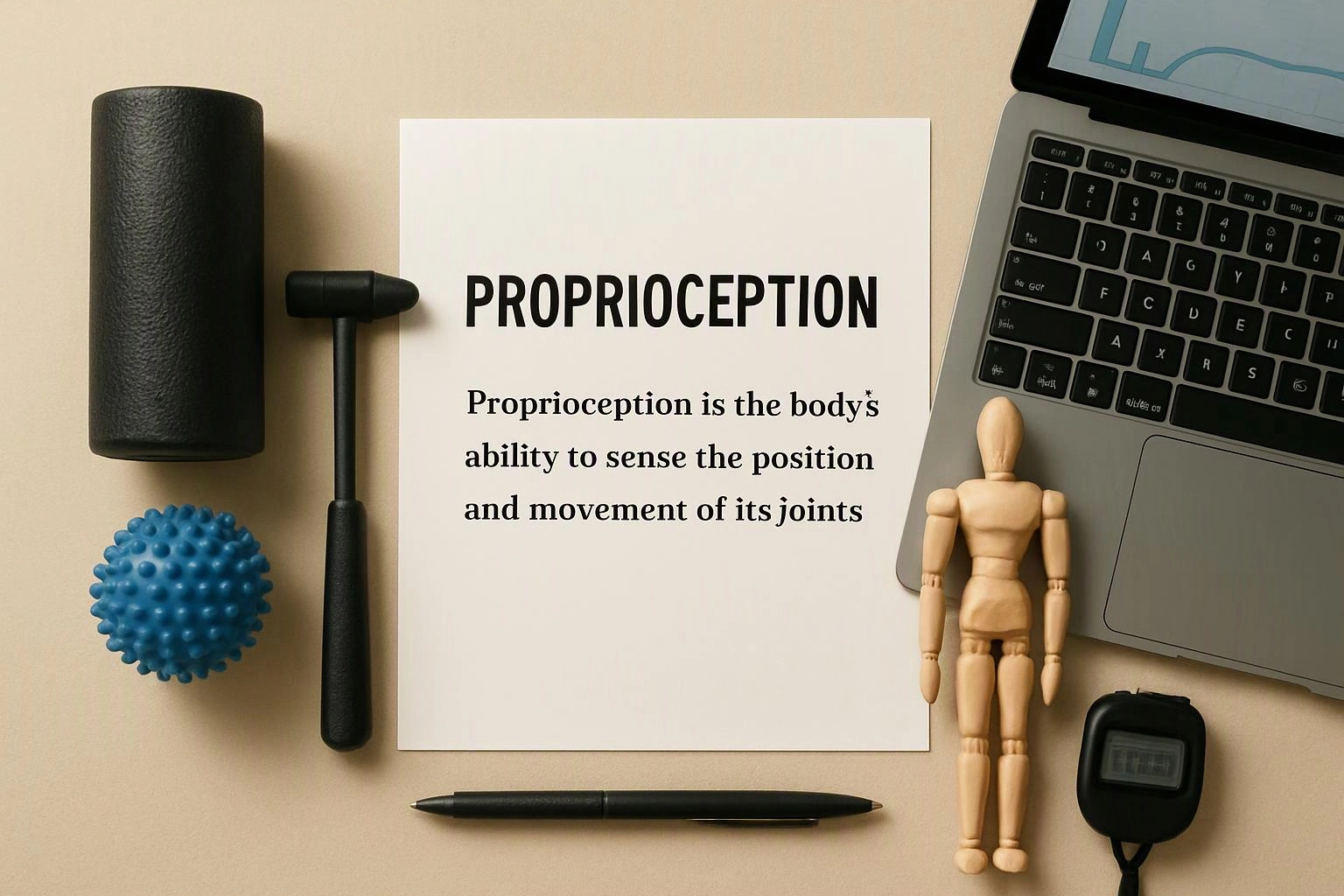
Proprioception works through sensory receptors in muscles, tendons, joints, and skin. These receptors detect changes in joint angle, muscle length, pressure, and movement. The nervous system combines those signals with information from vision and the inner ear, then adjusts muscle activity to guide a task.
Related glossary terms: Core Stability, Gait Analysis, Range Of Motion.
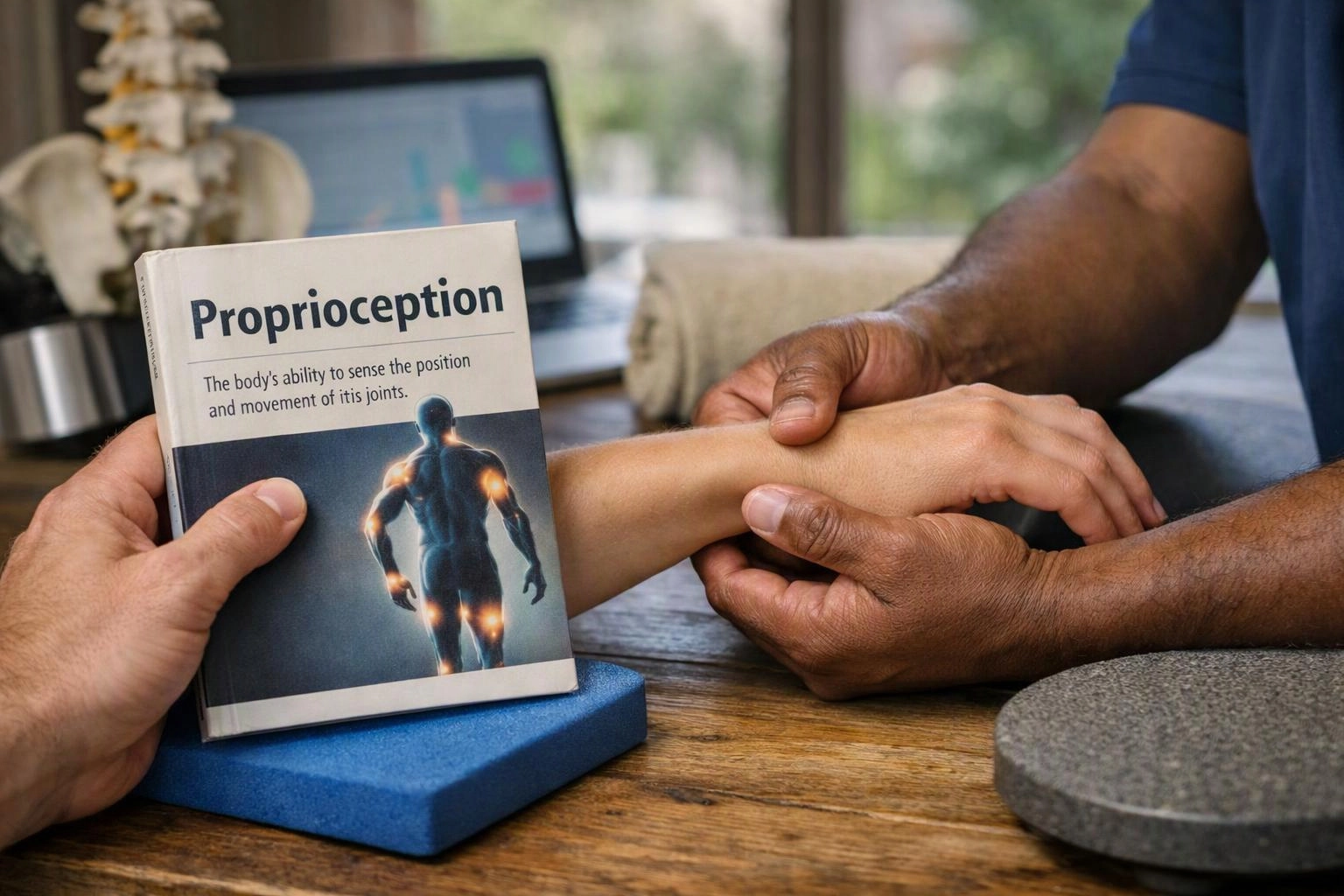
Therapeutic exercise may assess or train proprioception through controlled movements that change support, direction, or body position. A person might shift weight, reach while standing, or perform a slow single-leg task. These activities ask the nervous system to monitor position and refine movement. Proprioception supports balance, but balance also depends on vision, inner-ear signals, strength, and attention.
From the Arrowhead Clinic Chiropractor Savannah team
When we use therapeutic exercise, we observe how a person senses joint position during controlled movement. Our team may adjust the exercise by changing the support surface, direction, or task demand. We focus on movement quality and control, not on a single exercise performed in isolation.
Proprioception in Practice: A Real-World Example
A person recovering from an ankle injury may stand while reaching in different directions during therapeutic exercise. The task asks the foot, ankle, and nervous system to coordinate position changes while the person maintains controlled movement.
Related Services
Related Terms
Core Stability
Core Stability is the ability to control the trunk and pelvis while the body moves or…
Gait Analysis
Gait Analysis is a clinical assessment of how you walk or run. The assessment examines foot…
Range Of Motion
Range Of Motion is the amount and direction a joint can move through its available path…
Muscle Strain
Muscle Strain is an overstretching or tearing injury in muscle tissue or the tendon that connects…
Arrowhead Clinic Chiropractor Savannah
Have Questions About Proprioception?
Contact Arrowhead Clinic Chiropractor Savannah for practical guidance on Proprioception and related chiropractor work in Savannah.