
What Is Disc Degeneration?
Disc Degeneration is a gradual change in the spinal discs that reduces their ability to cushion movement between vertebrae. The discs may lose water content, flexibility, or height over time. These changes can occur in the neck or lower back and may appear with back pain, stiffness, or no symptoms at all.
Quick Facts About Disc Degeneration
Category
Spinal disc condition
Used for
Describing disc changes and related symptoms
Common confusion
Not identical to a herniated disc
Also called
Degenerative disc disease, DDD
Often discussed with
Herniated Disc Treatment
Key Takeaways About Disc Degeneration
- Disc changes may exist without causing symptoms.
- Symptoms can involve stiffness, local pain, or irritation near a nerve.
- Disc Degeneration is not the same as a herniated disc.
How Disc Degeneration Works
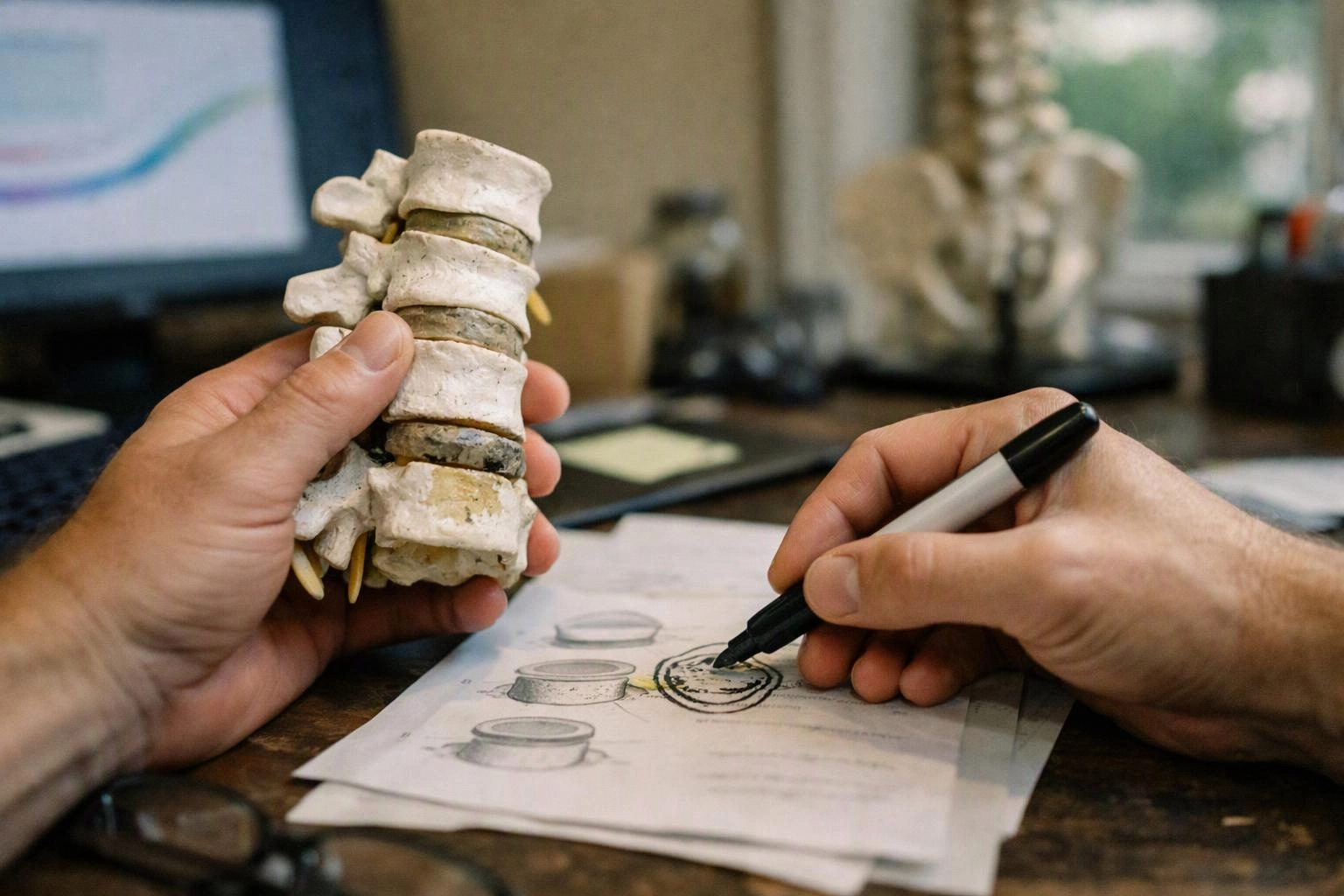
Disc Degeneration develops when a spinal disc changes over time and provides less flexible cushioning between nearby vertebrae. Disc tissue may become drier, thinner, or less resilient. These changes can affect movement and may place more stress on nearby joints or tissues.
Related glossary terms: Disc Bulge, Lumbar Spine, Nerve Root.
A clinician considers the location of symptoms, movement limits, and signs of nerve irritation when discussing disc degeneration. Imaging may show disc changes, but an image does not always explain a person’s symptoms. A herniated disc involves displaced disc material, while degeneration describes broader wear or structural change. The two conditions can occur together, but they are not interchangeable.
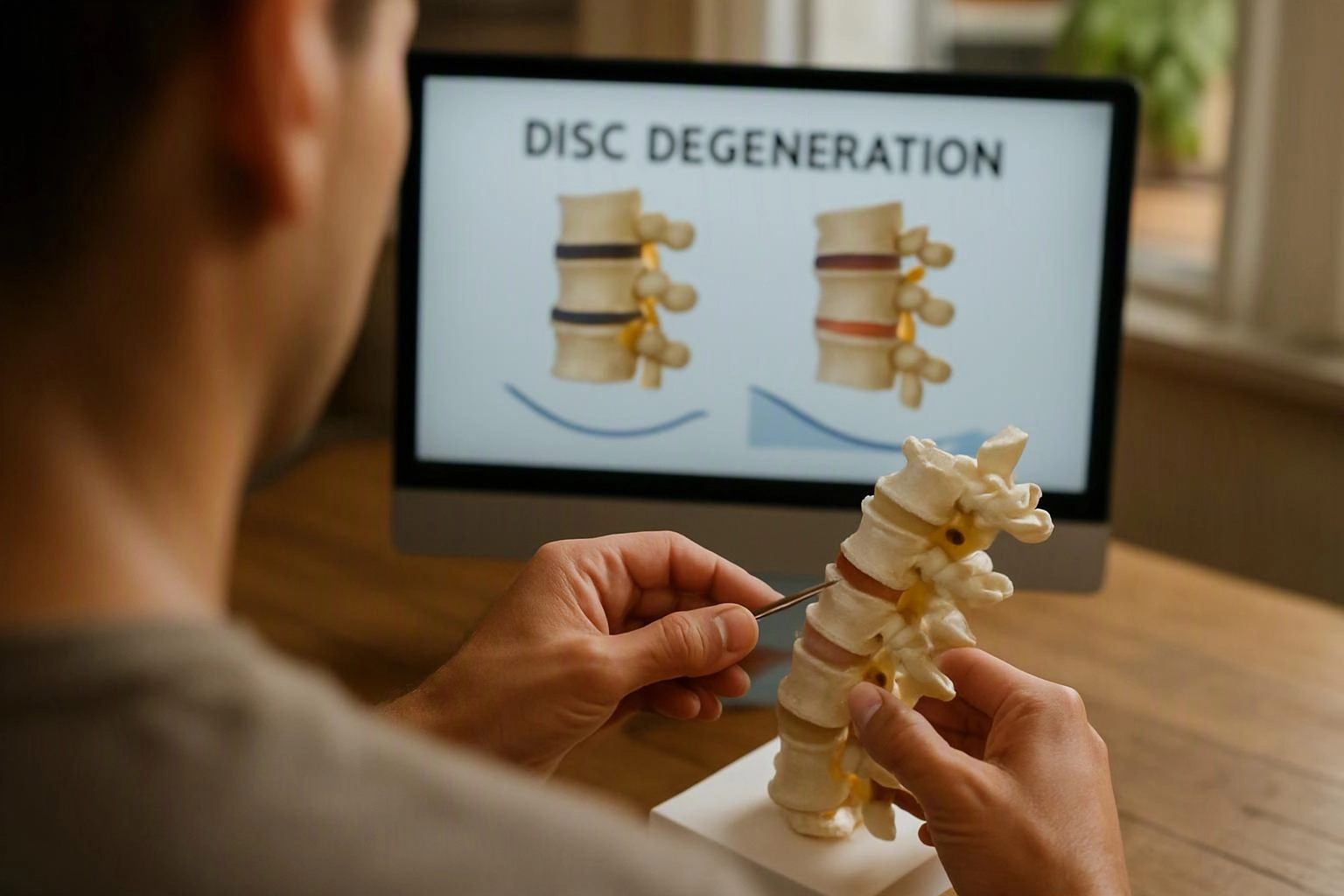
From the Arrowhead Clinic Chiropractor Savannah team
When we assess Disc Degeneration, we review the person’s symptoms, movement, posture, and available imaging together. Our team also checks whether nerve irritation or nearby joint problems may contribute to the complaint. For Herniated Disc Treatment, these findings help guide a careful, individualized care plan.
Disc Degeneration in Practice: A Real-World Example
A person with lower back stiffness may have disc degeneration that becomes more noticeable during prolonged sitting or repeated bending. In Herniated Disc Treatment, the evaluation also considers whether a separate disc protrusion is irritating a nearby nerve.
Related Services
Related Terms
Disc Bulge
A disc bulge is a change in an intervertebral disc where the outer disc tissue extends…
Lumbar Spine
The lumbar spine is the lower section of the vertebral column, located between the thoracic spine…
Nerve Root
A nerve root is the short section of a spinal nerve that leaves the spinal cord…
Spinal Stenosis
Spinal Stenosis is a narrowing of the spaces within the spine that may reduce room for…
Arrowhead Clinic Chiropractor Savannah
Have Questions About Disc Degeneration?
Contact Arrowhead Clinic Chiropractor Savannah for practical guidance on Disc Degeneration and related chiropractor work in Savannah.