
What Is the Cervical Spine?
The cervical spine is the neck section of the vertebral column that supports the head and protects the upper spinal cord. It includes the vertebrae, discs, joints, muscles, ligaments, and nerves that guide neck movement. Its condition can influence neck motion, posture, and symptoms that extend into the shoulders or arms.
Quick Facts About Cervical Spine
Category
Spinal region
Used for
Assessing neck movement and related symptoms
Common confusion
The cervical spine is not the entire spinal column
Also called
Neck spine, Cervical region
Often discussed with
Neck Pain Treatment, Posture Correction
Key Takeaways About Cervical Spine
- The cervical spine forms the neck portion of the spine.
- Neck motion depends on connected joints, discs, muscles, and nerves.
- Neck pain does not always come from the cervical spine alone.
How Cervical Spine Works
The cervical spine works as a mobile support system for the head and neck. Its vertebrae form a protective passage for the spinal cord, while discs and facet joints help distribute movement and load. Muscles and ligaments guide motion and help maintain head position during daily activities.
Related glossary terms: Cervical Lordosis, Atlas, Axis.
Assessment focuses on how the neck moves and how nearby tissues respond. A clinician may observe posture, check active range of motion, and compare symptoms during specific movements. The nerve roots that leave the spinal cord can also affect sensation or strength in the shoulder, arm, or hand. A neck pain evaluation therefore considers the cervical spine alongside connected regions such as the thoracic spine and shoulder.
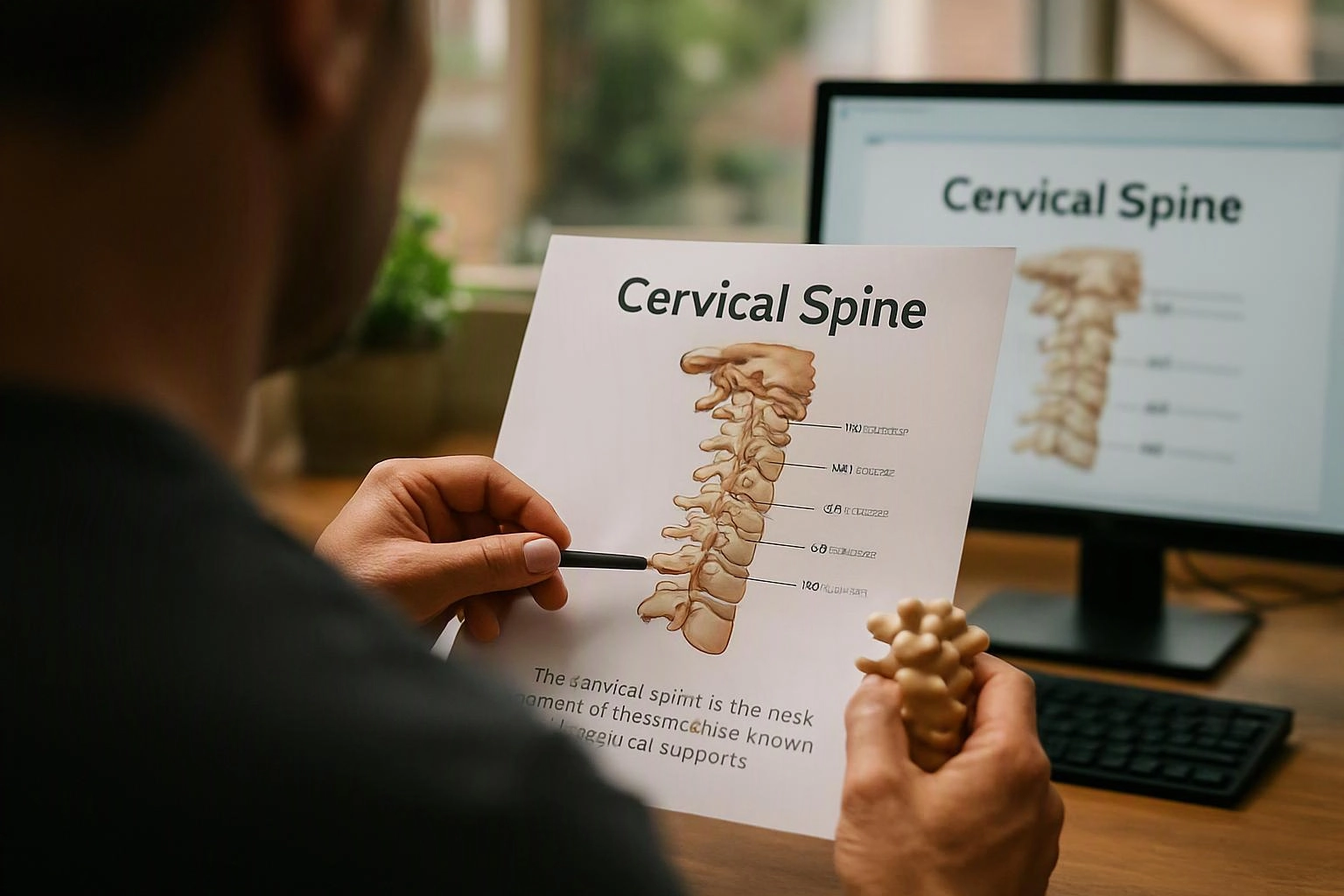
From the Arrowhead Clinic Chiropractor Savannah team
When we assess the cervical spine during Neck Pain Treatment, we consider neck motion, posture, muscle tension, and symptom patterns together. Our team also checks whether shoulder or upper-back movement changes the patient’s presentation. These findings help guide a careful, individualized approach.
Cervical Spine in Practice: A Real-World Example
A person with neck pain after extended desk work may show limited rotation and increased upper-neck muscle tension. During Neck Pain Treatment, the clinician assesses cervical movement and related shoulder and upper-back mechanics before selecting appropriate care.
Related Services
Related Terms
Cervical Lordosis
Cervical Lordosis is the natural inward curve of the neck portion of the spine. This curve…
Atlas
Atlas is the first cervical vertebra in the neck, located beneath the skull and above the…
Axis
The axis is the second cervical vertebra in the neck. It sits below the atlas and…
Range Of Motion
Range Of Motion is the amount and direction a joint can move through its available path…
Arrowhead Clinic Chiropractor Savannah
Have Questions About Cervical Spine?
Contact Arrowhead Clinic Chiropractor Savannah for practical guidance on Cervical Spine and related chiropractor work in Savannah.